You've probably felt it coming. Nothing this useful stays completely free forever. ChatGPT costs enormous amounts to run, billions in compute power annually, and OpenAI has been clear about needing sustainable funding beyond venture capital and paid subscriptions.
So here we are. Ads in ChatGPT. Not everywhere yet, not for everyone, but rolling out gradually starting with partnerships like Instacart for grocery shopping assistance. The question isn't whether this was inevitable. It's what this actually means for how you use ChatGPT, whether the experience changes fundamentally, and how advertising in AI will work differently than the ads you're used to.
What Are ChatGPT Ads?
ChatGPT ads are sponsored responses or integrations that appear during your conversations with the AI. Unlike banner ads cluttering a webpage or pre-roll videos interrupting content, these ads attempt to blend into the conversational flow.
The first test partner is Instacart. When you ask ChatGPT for help with meal planning, recipe ideas, or grocery lists, the AI might suggest using Instacart to order ingredients, presenting it as a helpful tool rather than an obvious advertisement.
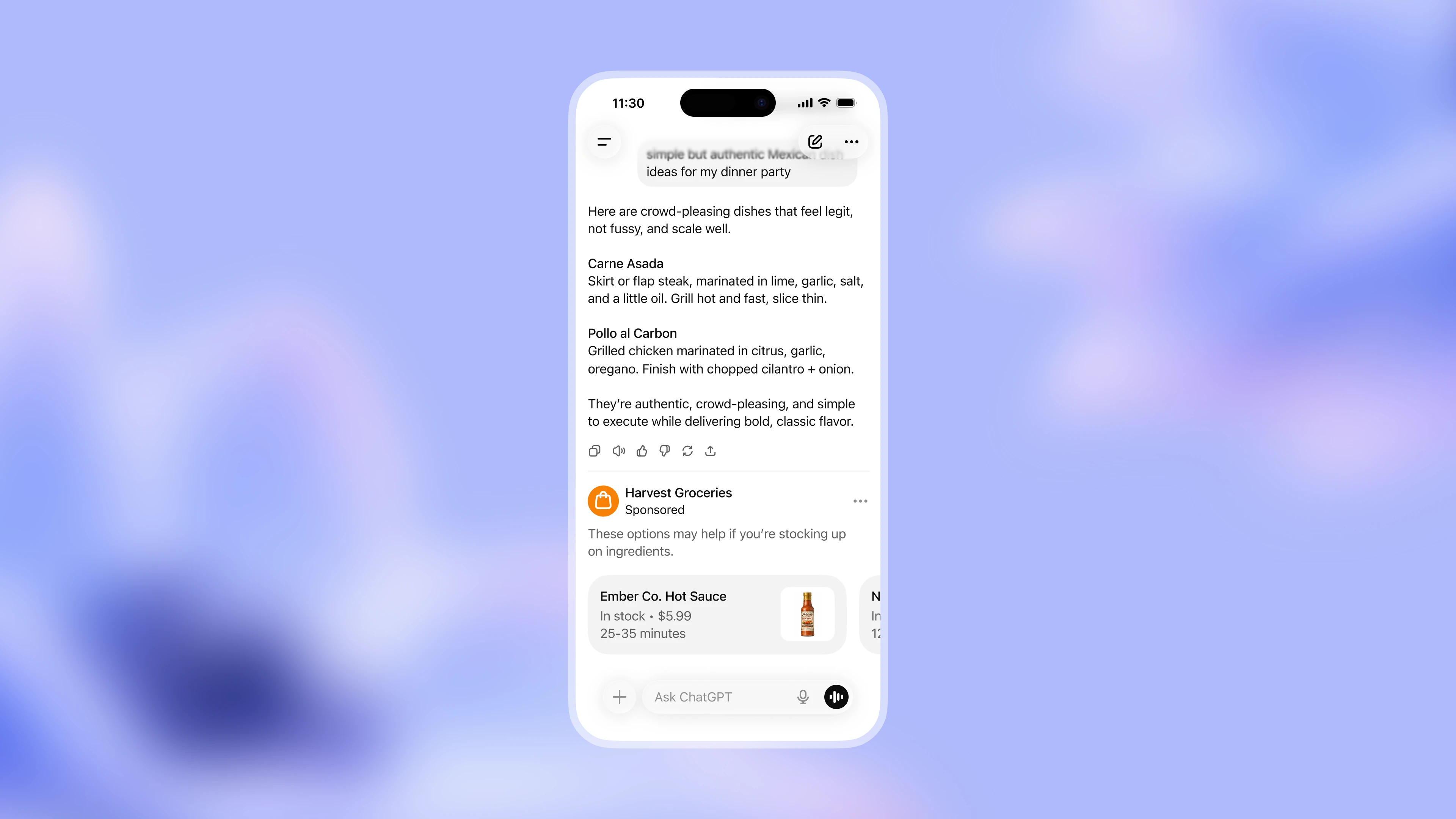
This is "native advertising" taken to its logical conclusion. Instead of ads sitting alongside content, they become part of the content itself. The AI doesn't just tell you what to cook. It offers to connect you with a service that delivers the ingredients, seamlessly, within the same conversation.
Whether that feels helpful or manipulative depends largely on execution. A genuinely useful suggestion that saves you time feels different than the AI pushing products you don't need. OpenAI emphasizes that ads will be "clearly labeled" so you know when you're seeing sponsored content versus organic AI responses.
Why OpenAI Is Adding Ads to ChatGPT
The simple answer is money. Running ChatGPT costs OpenAI somewhere between $5 million and $10 million daily. That's over $2 billion annually just in operational costs.
ChatGPT Plus subscriptions at $20 monthly provide meaningful revenue, reportedly over $2 billion annually with more than 10 million paid subscribers. But Plus subscribers represent a fraction of total users. The vast majority use ChatGPT free, generating costs without directly generating revenue.
OpenAI's stated mission involves making AI broadly accessible. Free access matters for that goal. But free access that loses billions of dollars isn't sustainable long term.
Advertising creates a funding model that keeps free access viable while generating revenue from users who won't or can't pay for subscriptions. It's the same model that's supported Google, Facebook, and most of the internet's "free" services for decades.
Beyond immediate financial necessity, ads align with OpenAI's partnership strategy. Working with companies like Instacart creates ecosystems where ChatGPT becomes the interface layer connecting users to services, taking a cut of commerce flowing through AI interactions.
Where and How Ads Will Appear in ChatGPT
Ads in ChatGPT won't look like banner ads or video pre-rolls you're used to dismissing. They'll appear as part of the conversation itself.
Here's how the Instacart integration reportedly works: You ask ChatGPT for dinner ideas. It suggests recipes. You mention you need to buy ingredients. ChatGPT offers to help you order them through Instacart, providing a link directly to checkout with those items already in your cart.
The ad isn't interrupting your task. It's completing it, or attempting to. You wanted meal ideas and ingredients. ChatGPT provided both, with the ingredients portion monetized through partnership.
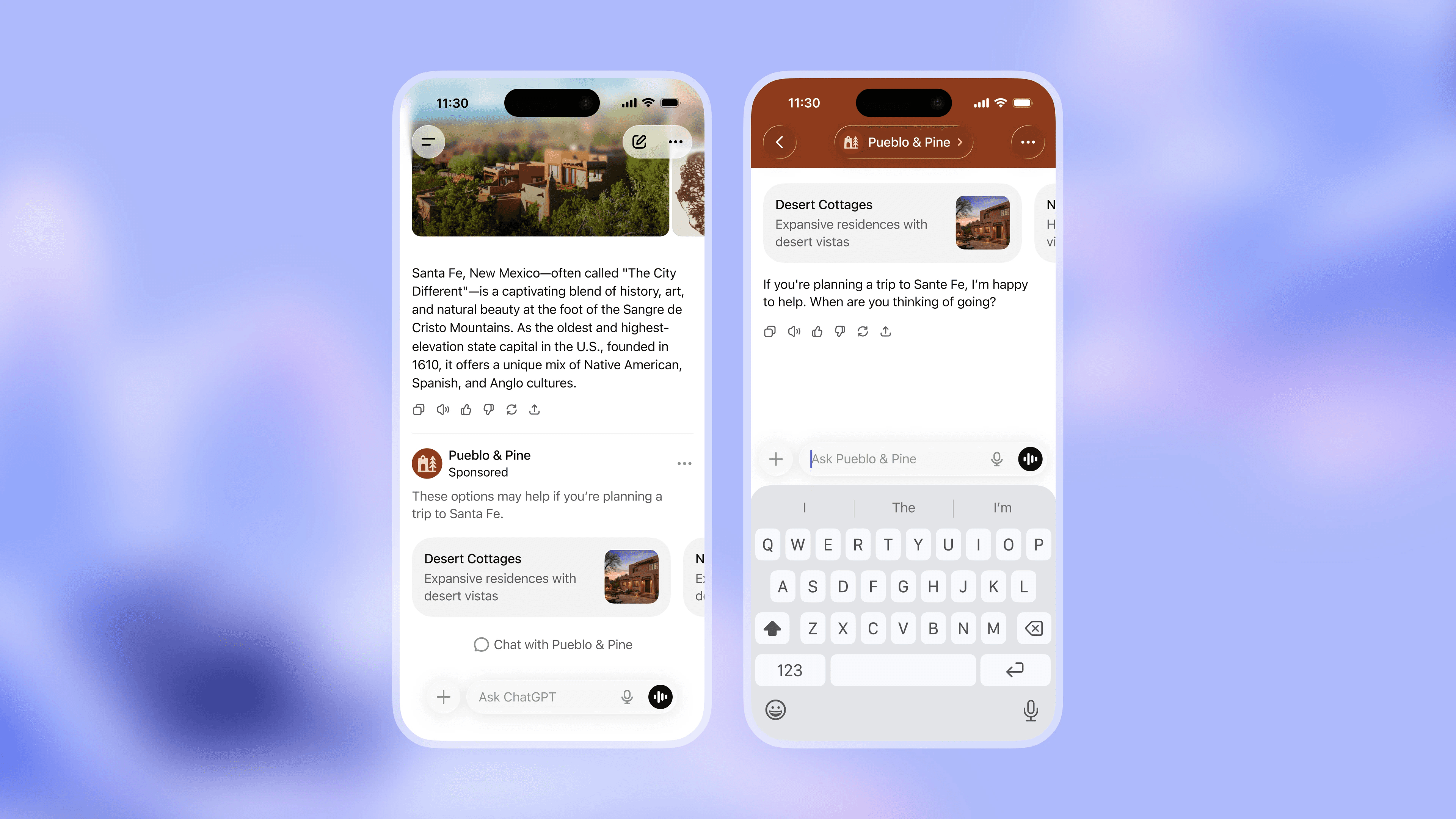
Other potential implementations might include travel booking platforms when you ask about trips, product recommendations with sponsored options clearly labeled, or professional services when you need legal or financial help.
OpenAI has committed to clearly labeling sponsored content. The frequency matters too. If every third response includes sponsored content, ChatGPT starts feeling less like helpful assistant and more like aggressive salesperson. If ads appear rarely and only when genuinely relevant, users might accept or even appreciate them.
Timing of rollout is gradual. Free tier users in select markets see initial tests. Based on feedback, OpenAI will expand to more users, more partners, more ad formats.
Will ChatGPT Plus Users See Ads?
Currently, no. OpenAI has stated clearly that ChatGPT Plus subscribers, paying $20 monthly, will continue enjoying an ad-free experience.
This makes sense strategically. Part of what you're paying for with Plus is removing friction and distraction. Faster responses, access during high traffic, priority to new features, and critically, no advertising interrupting your workflow.
However, that "currently" carries weight. Tech companies have a pattern of introducing ad-free paid tiers, building user bases, then slowly introducing ads even to paid users. YouTube Premium, Hulu, and Amazon Prime Video all evolved this way.
For now, if you're paying for Plus, you're safe from ads. Whether that remains true five years from now is less certain. The safest assumption is that Plus remains ad-free as long as doing so makes more financial sense than risking subscriber loss.
What This Means for Advertisers
If you're a business wondering how to reach customers, ChatGPT ads represent potentially transformative opportunity.
Unlike traditional ads where you interrupt someone's attention, ChatGPT ads respond to explicit intent. Someone asking "what's the best project management software for small teams" is actively researching solutions. An ad suggesting your product in that moment reaches someone ready to consider options.
The targeting becomes incredibly precise through the query itself. You don't need to infer intent from browsing history. The user just told you exactly what they want.
However, significant unknowns remain. OpenAI hasn't opened a self-serve advertising platform. Early integrations appear to be direct partnerships with major brands. Pricing models are undefined. Do you pay per impression? Per click? Per conversion?
What businesses should do now: Monitor OpenAI's announcements about advertising partnerships. Consider how your product could naturally integrate into conversational AI. Focus on being the genuinely best answer to questions people ask, because as AI becomes smarter about recommending solutions, quality matters more than ever.
User Experience and Privacy Considerations
The success of ChatGPT ads depends entirely on whether they enhance or degrade user experience.
Good advertising in ChatGPT would feel like getting a helpful suggestion from a knowledgeable friend. Bad advertising feels like being constantly sold to. Every conversation becomes a pitch. Trust evaporates.
OpenAI claims ads will be clearly labeled and limited in frequency. That commitment, if maintained, matters enormously. Aggressive advertising with minimal disclosure ruins the experience.
On privacy, traditional digital advertising thrives on surveillance. ChatGPT ads could theoretically work differently. The query itself contains intent without needing invasive data collection.
OpenAI states that conversations aren't used to build advertising profiles like Facebook or Google do. Whether this remains true as advertising scales and pressure increases to maximize revenue is the critical question.
The temptation to leverage conversation data for targeting will be enormous. Whether OpenAI resists that temptation determines whether ChatGPT ads remain acceptable or become surveillance tools.
Future of Advertising in AI Assistants
ChatGPT ads are just the beginning. As AI assistants become more central to how we find information and make decisions, advertising will evolve in ways we're only starting to imagine.
Google revolutionized advertising by connecting ads to search intent. Conversational AI takes this further. Instead of typing keywords, you have detailed discussions about what you need. The AI understands context deeply. Advertising can become genuinely personalized through the conversation itself.
Imagine asking your AI assistant to plan a vacation. It suggests destinations, books flights, reserves hotels, plans activities, all through integrated partnerships. You never leave the conversation. The AI handles everything, taking cuts from each transaction.
The concerning scenario is when distinction between information and advertising becomes impossible to discern. If you ask about climate change and get responses subtly influenced by company partnerships, that's corruption of knowledge, not advertising.
OpenAI's commitment to clearly labeling ads matters enormously. As long as you can tell what's sponsored versus organic information, you can evaluate accordingly. If that line blurs, trust collapses.
Final Thoughts
Ads in ChatGPT were probably inevitable. Running AI at scale costs extraordinary amounts. Advertising provides funding that keeps free access viable.
What matters now is execution. Done well, ChatGPT ads could improve experience by connecting you to genuinely useful products exactly when you need them. Done poorly, ChatGPT becomes another platform where you're the product being sold, your conversations mined for data, your trust violated by aggressive monetization.
OpenAI's commitments to transparency, clear labeling, limited frequency, and keeping paid tiers ad-free are the right starting points. Whether they maintain those standards as pressure to grow revenue increases will determine whether ChatGPT ads become accepted norm or cautionary tale.
For users, the choice is clearer than ever: pay $20 monthly for ad-free experience, or accept that free access means seeing advertising. Neither option is wrong. It depends on your budget and tolerance for ads.
The future of AI advertising is being written right now with these first experiments. How it develops will shape how we interact with AI and whether AI assistants remain helpful tools or become primarily commercial platforms.
FAQs
Will I start seeing ads in my free ChatGPT account?
If you use the free version, you'll likely start seeing ads as OpenAI expands testing. Rollout is gradual, so timing varies by region. Ads will appear as sponsored responses during conversations, clearly labeled to distinguish them from organic AI responses. Paid Plus subscribers remain ad-free.
Are ChatGPT ads personalized based on my data?
Currently, ChatGPT ads appear to be contextual rather than profile-based. They respond to what you ask in the current conversation rather than tracking your behavior to build advertising profiles. However, as advertising scales, this could change. Monitor OpenAI's privacy policies for updates.
Can businesses apply to advertise on ChatGPT now?
Not yet through self-serve platform. Early ads are direct partnerships with select companies like Instacart. OpenAI hasn't announced when they'll open advertising to broader business participation. Monitor OpenAI's official announcements for partnership opportunities.
Will ChatGPT ads affect the accuracy of answers?
OpenAI states ads will be clearly labeled and separated from organic information. The concern is whether commercial partnerships influence supposedly neutral responses. Users should remain critical about recommendations, especially for products or services, regardless of whether they're explicitly labeled as ads.
How does OpenAI decide what gets advertised?
OpenAI appears to be selecting major brands that integrate naturally with common ChatGPT use cases. As advertising expands, selection likely will include relevance to queries, advertiser quality, and payment. Ideally, ads would be selected primarily based on genuine relevance to what the user asked.